Glow Up Fast How to Transition From Heavy Makeup to Healthy Skin
You love the big glam moment, but your skin is begging for a breather. You want to scale back the full-beat and still look (and feel) put together. Good news: you don’t need to choose between makeup and great skin. You can have both—just shift how you use makeup and how you treat your face underneath it.
Why You Might Want to Ditch the Heavy Beat (Sometimes)
You’re not breaking up with makeup; you’re redefining the relationship. Heavy layers can trap oil and sweat, clog pores, and irritate your barrier—especially if you skip good skincare or sleep in foundation (no judgment, we’ve all done it). Give your skin a chance to function without constant spackle, and you’ll likely see less congestion and more glow.
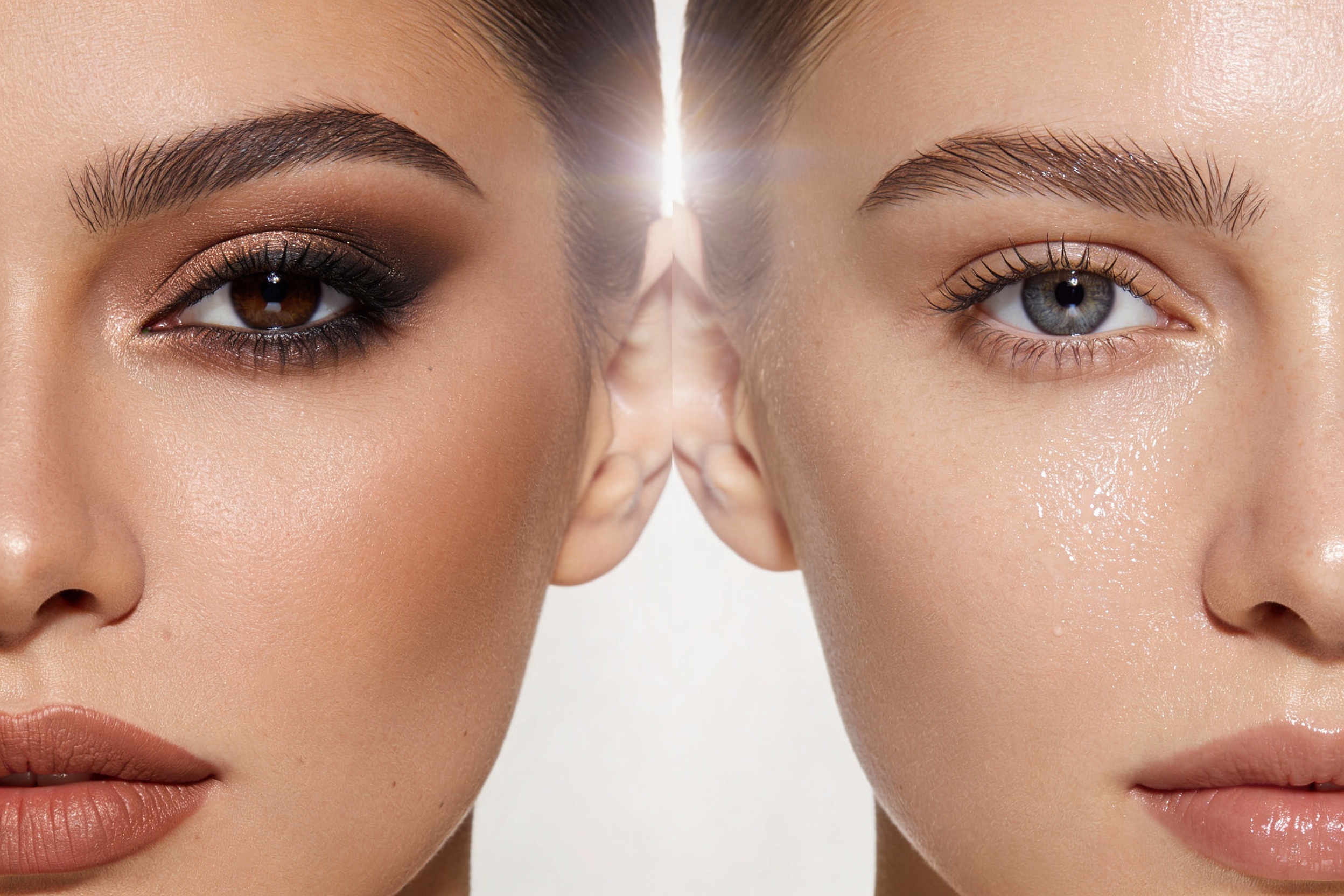
Think of this as a reset, not a renunciation. You can still rock a smoky eye on Saturday night. You’re just building a healthier baseline that makes everything you put on top look better.
Overeating doesn’t mean something is wrong with you. It means your system needs a reset.
If cravings keep pulling you off track, this helps you regain control without restriction. You’ll learn simple, realistic steps to stop overeating and feel satisfied again.
Step One: Create a “Skin-First” Ritual
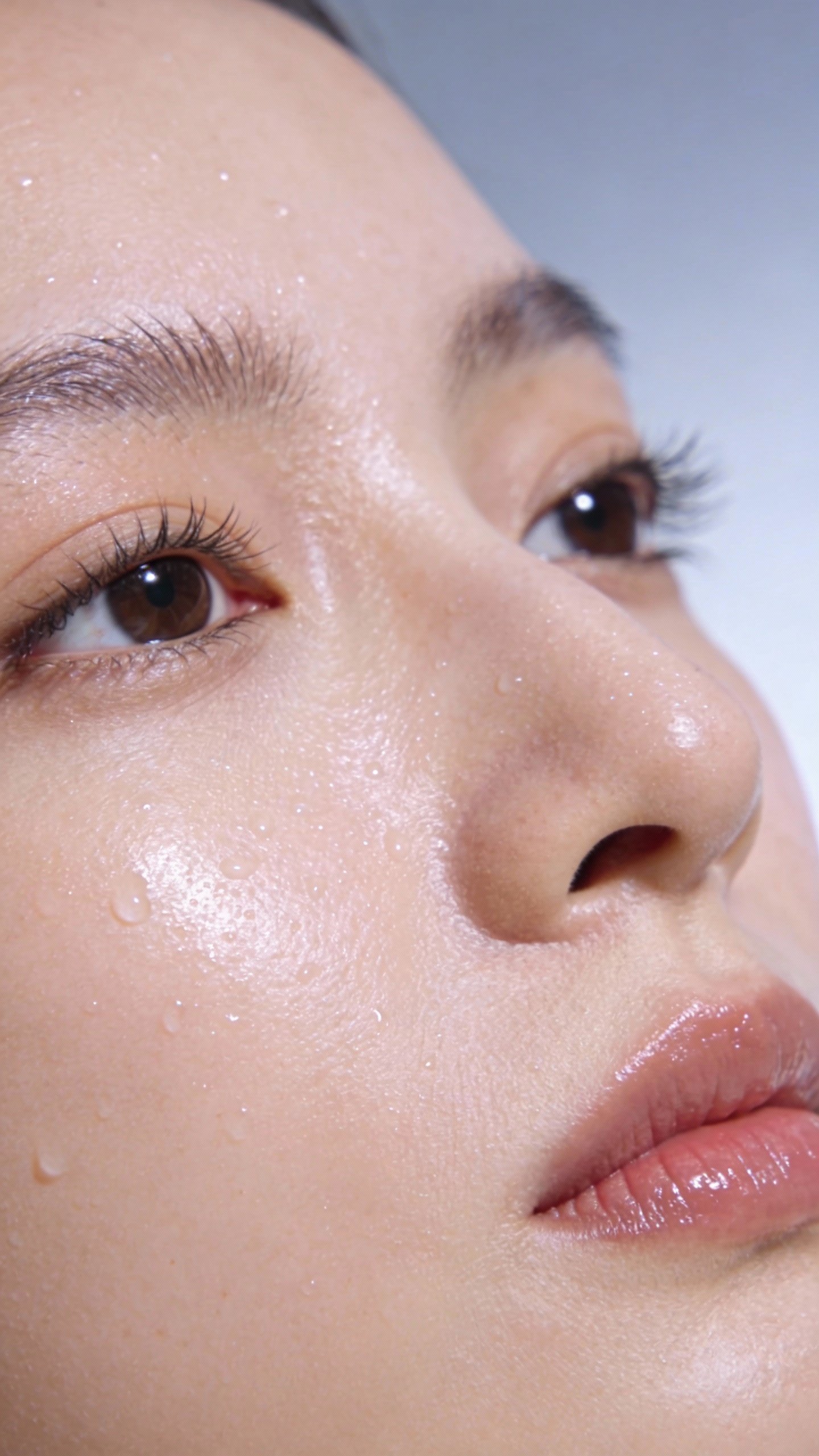
Let’s make your skincare routine do the heavy lifting so your makeup doesn’t have to. You don’t need a 12-step routine. You need smart, consistent basics.
- Cleanser (AM/PM): Choose gentle, low-foam. Gel for oily-combo, cream for dry, micellar for super sensitive.
- Hydrator: Layer a humectant serum (like hyaluronic acid or glycerin) before moisturizer for bounce.
- Moisturizer: Lightweight lotion for day, richer cream if you’re dry or flaky.
- SPF 30+ every morning: Non-negotiable. No glow-up survives UV damage.
Night Moves: Repair Mode
At night, let your skin rebuild. Alternate:
- Exfoliation 1–3x/week: AHA/BHA toner or serum to smooth texture and help clear congestion.
- Retinoid 2–4x/week: Vitamin A encourages collagen and keeps pores behaving. Buffer with moisturizer if you get irritated.
FYI, don’t stack strong acids and retinoids on the same night unless your barrier loves drama.
Step Two: Transition Your Makeup in Phases
Going cold turkey from full-coverage to bare face can feel… rude. Ease into it with swaps that still deliver confidence.
- Week 1–2: Switch from full-coverage foundation to skin tint or light foundation. Spot-conceal only where needed. Set selectively (T-zone, around nose).
- Week 3–4: Trade heavy cream contour for a sheer bronzer. Use cream blush for a real-skin flush.
- Week 5+: Skip foundation some days. Use concealer under eyes and around redness, then a touch of powder. Done in five minutes, smug all day.
Spot-Concealing 101
Use a small brush and a creamy concealer exactly on blemishes or redness. Tap, don’t smear. Let it set for 30 seconds, then feather the edges. It looks like skin because… most of your skin is still showing. Revolutionary, I know.
Step Three: Clean Up Your Base Wardrobe
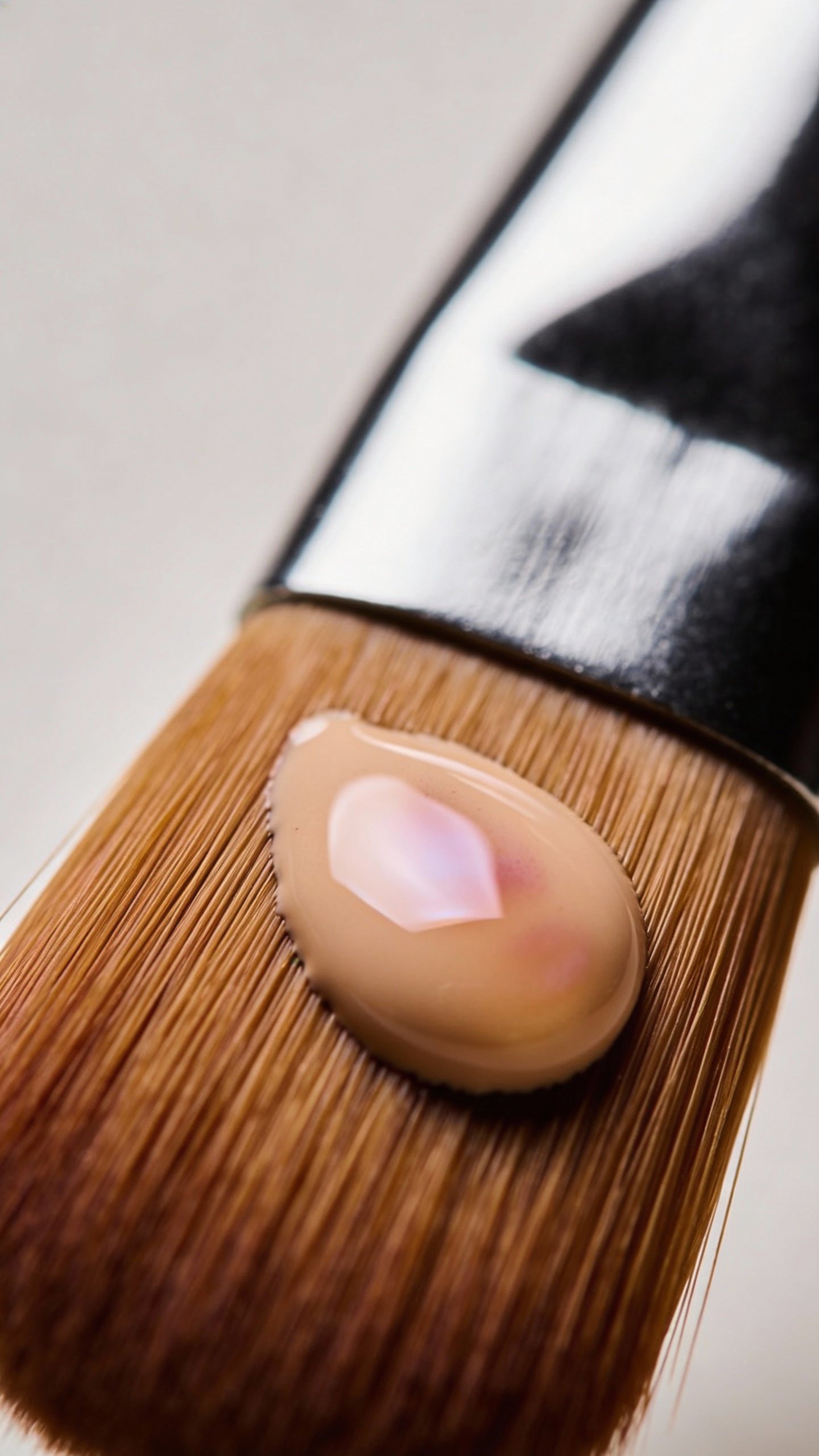
Your base products can make or break skin health. Choose formulas that play nice with pores and your barrier.
- Primer: Hydrating primers beat pore-plugging silicones for everyday use. A blur primer is fine for events, IMO.
- Foundation/Tint: Look for words like “non-comedogenic,” “sheer,” and “serum.” Avoid heavy fragrance if you’re reactive.
- Concealer: Creamy with medium coverage. Drier formulas cake and emphasize texture.
- Powder: Finely milled, talc or silica-based. Use sparingly with a small brush—not a snowstorm with a powder puff.
Brushes and Sponges: The Hygiene Talk
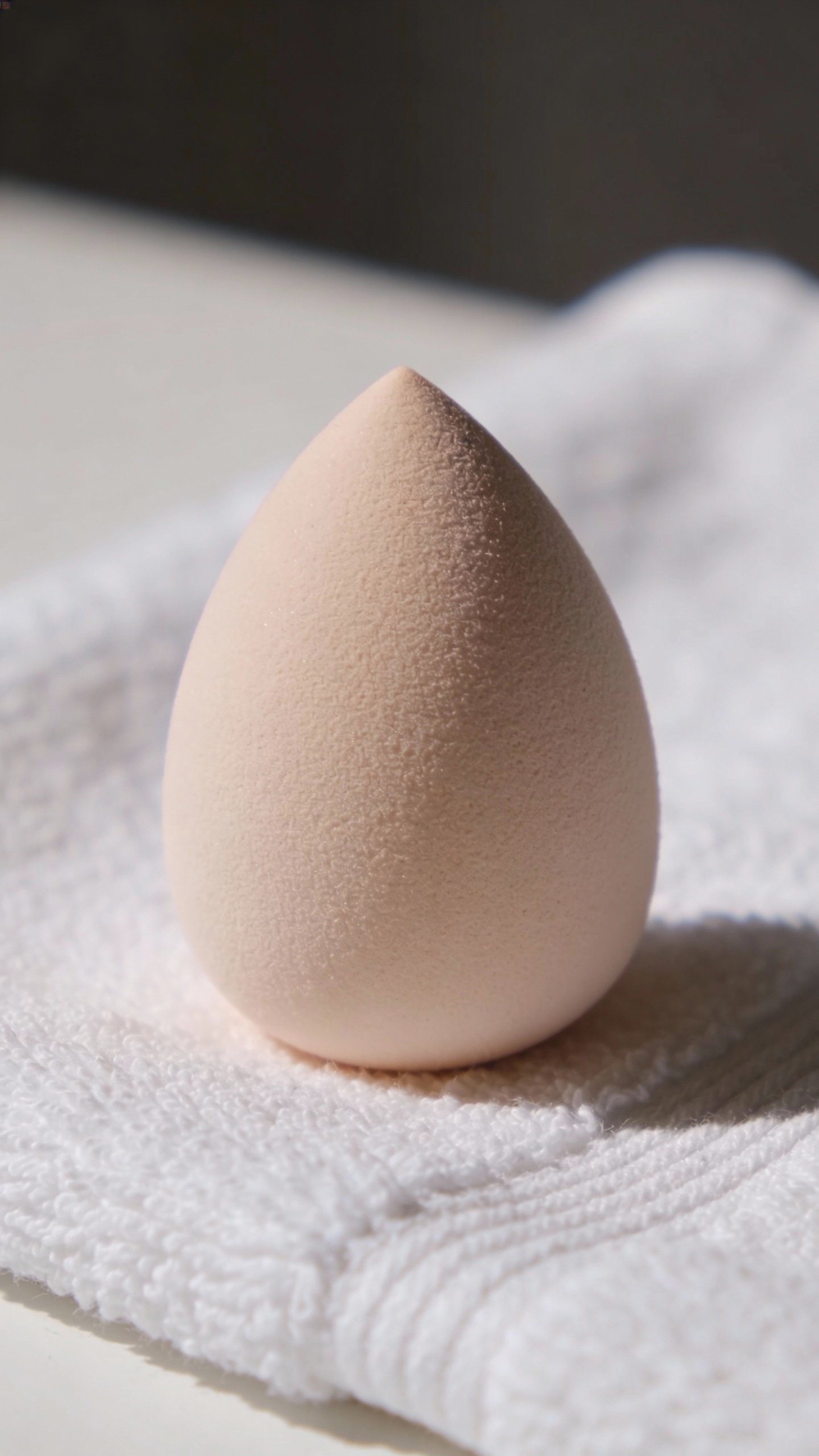
Yes, you need to wash them. Weekly for face brushes/sponges, biweekly for eye brushes. Use a gentle brush cleanser or fragrance-free soap. Dirty tools equal breakouts and dullness. Your skin can’t glow under yesterday’s bronzer film.
Step Four: Master the “Healthy Skin” Look
You can still look polished with minimal product. Focus on strategic enhancement, not blanket coverage.
- Complexion: Skin tint + pinpoint concealer. Tap cream blush high on the cheeks. Add a touch of cream highlighter on the tops of cheekbones (not the apple—unless you want disco pores).
- Brows: Brush up, fill in sparse areas with a thin pencil. Lift without looking stamped on.
- Eyes: Tightline the upper lash line and curl lashes. One coat of mascara. Soft shadow if you want depth.
- Lips: Tinted balm or lip oil. A blotted satin lipstick works too.
The vibe: fresh, effortless, annoyingly radiant. Like you “just woke up like this,” except your topknot hides the effort.
Color Theory Cheat Sheet
– Dull skin? Choose peachy blush and warm highlighter.
– Redness? Opt for neutral/olive base and rose-brown blush.
– Sallow tone? Try cool pink blush and a champagne highlight.
Small swaps change everything.

Step Five: Fix the Stuff Heavy Makeup Was Hiding
If you rely on coverage for texture, melasma, or breakouts, tackle the roots so you need less product.
- Acne/congestion: Salicylic acid 0.5–2% and a retinoid. Clay masks 1x/week. Keep hair products off your face line.
- Redness/rosacea: Gentle cleanser, azelaic acid 10%, niacinamide 2–5%, mineral SPF. Avoid scrubs and hot water.
- Hyperpigmentation: Vitamin C (stable forms), azelaic acid, tranexamic acid at night, and consistent SPF. Without sunscreen, you’re basically refilling the stain.
- Texture/dullness: Lactic or mandelic acid 1–3x/week, then moisturize like you mean it.
When to See a Pro
If breakouts won’t quit, pigmentation sticks around for months, or your skin stings constantly, see a dermatologist or licensed esthetician. Professional guidance saves time and, FYI, money you’d otherwise spend on random “miracle” serums.
Make Removal Non-Negotiable
You can’t out-serum bad habits. Remove makeup every night—no exceptions, even “I’m tired” nights.
- Step 1: Oil or balm cleanser to melt sunscreen and makeup.
- Step 2: Gentle water-based cleanser to finish. Your towel should come away clean.
- Bonus: Spritz a hydrating mist, apply your treatment, then moisturizer. Lights out.
Travel or Gym?
Micellar water on cotton pads works in a pinch. Rinse when you can. Stash mini sizes in your bag and thank yourself later.
Build Confidence on “Less Makeup” Days
Real talk: going lighter can feel vulnerable. You can ease the mental shift too.
- Focus on one feature: Bold brows or a soft wing draws attention where you want it.
- Lean on glow: Hydrated skin reflects light and looks healthy even without coverage.
- Use good lighting: Do your routine near a window. Bad bathroom lighting gaslights everyone.
- Set a goal: Try two makeup-light days per week. Increase as your comfort grows.
IMO, once you see your natural skin behave, you’ll reach for the full beat only when the moment calls for it—not because you feel you have to.
FAQ
Will my skin purge when I wear less makeup?
Not because of wearing less makeup itself. Purging usually happens when you start active ingredients like retinoids or acids that speed up cell turnover. If you simplify your base and keep your routine gentle, you might actually see fewer breakouts.
How long until I see a difference?
Give it 4–6 weeks for your skin barrier to chill out and texture to improve. Pigmentation takes longer—think 8–12 weeks with consistent sunscreen and targeted ingredients. Stay patient and consistent; results compound.
Can I still use full coverage for events?
Absolutely. Treat it like special-occasion heels. Prep with extra hydration, apply thin layers, and remove thoroughly that night. Your skin won’t spiral from one glam evening.
What if my skin looks dull without foundation?
Boost hydration first. Then try a sheer luminizing primer or mixing a drop of liquid highlighter into your moisturizer. A cream blush on the apples of your cheeks adds instant life.
Do I need expensive products to get healthy skin?
Nope. You need consistency and the right formulas. Plenty of drugstore cleansers, sunscreens, and moisturizers work beautifully. Splurge on actives if you want, but don’t underestimate the basics.
Is “non-comedogenic” actually meaningful?
It helps, but it’s not a guarantee. The term isn’t strictly regulated. Use it as a starting point, then listen to your skin. If a product clogs you, it’s a no—label or not.
Conclusion
You don’t have to ghost your glam to get healthy skin—you just need smarter habits and lighter layers. Build a skin-first routine, transition your base in phases, and target the stuff you used to cover. Keep the joy of makeup, minus the daily spackle. And when you do go full glam, it’ll sit smoother, last longer, and look even better on the healthy canvas you created.