How to Tame Frizzy Hair in Humidity and Actually Win
Humidity shows up, your hair flips out, and suddenly you’re two steps from becoming a walking cloud. Been there. The good news? You can tame the frizz without living in a climate-controlled bunker or slicking your hair down with half a bottle of gel. Let’s break down what actually works, why it works, and how you can keep your hair smooth even when the air feels like soup.
Why Humidity Makes Hair Go Wild
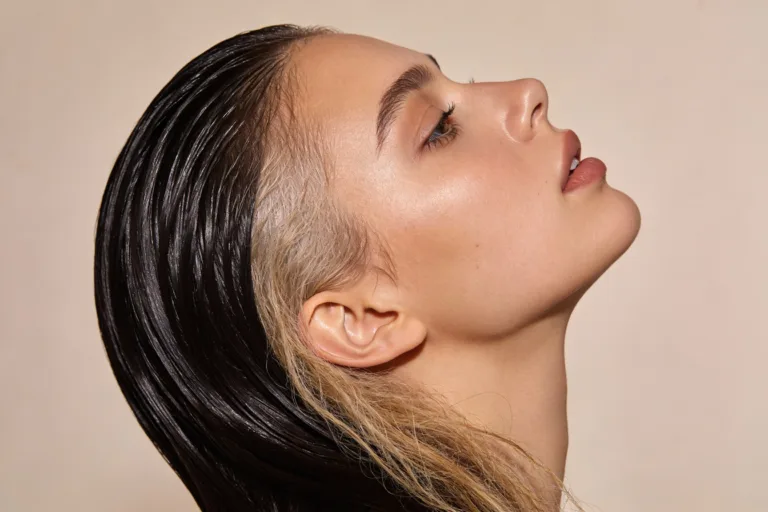
Your hair acts like a sponge. When moisture in the air skyrockets, your strands soak it in, swell, and the cuticle lifts. That raised cuticle scatters light and creates that frothy “halo.” Cute for cherubs, terrible for morning meetings.
The fix: keep the cuticle sealed and the hair balanced with hydration. Not greasy. Not crunchy. Hydrated and protected. Sound doable? It is.
Overeating doesn’t mean something is wrong with you. It means your system needs a reset.
If cravings keep pulling you off track, this helps you regain control without restriction. You’ll learn simple, realistic steps to stop overeating and feel satisfied again.
Start in the Shower: Products That Actually Help

You can’t fight humidity with a random shampoo and a prayer. Your wash routine sets the tone for your whole day.
- Use a sulfate-free shampoo. Sulfates strip oils and rough up the cuticle. You need gentle cleansing so your hair stays calm.
- Condition like you mean it. Look for ingredients like glycerin (humectant), betaine, and fatty alcohols (cetyl, stearyl) to hydrate without weight.
- Once a week, use a deep conditioner or mask. Humidity magnifies damage. Repair the cuticle with proteins like keratin or silk amino acids—but don’t overdo protein if your hair feels stiff.
Pro tip: the rinse matters
Cool water helps lay the cuticle down. Finish your shower with a quick cool rinse. It’s uncomfortable. It’s also effective.
Leave-In Layering That Beats The Frizz
Think of styling like building a weatherproof jacket for your hair: hydration inside, sealant outside.
- Leave-in conditioner: Apply on damp hair mid-lengths to ends. This gives slip, moisture, and a smooth base.
- Anti-frizz cream or serum: Creams work best for thicker hair; serums with silicones (like dimethicone) excel in high humidity for a smooth seal.
- Gel or mousse (optional): If your hair loves definition, layer a light-hold gel to lock shape. Scrunch out the crunch later.
How much product is too much?
Start small: a nickel-sized amount of cream for shoulder-length hair; half a pump of serum. Add more only if your hair still feels grabby or dry. If your roots look oily by noon, back off the amount or keep products below the ears.
Drying Techniques That Don’t Create Fluff

You can’t towel-torture your hair and expect cooperation. Gentle methods win.
- Microfiber towel or cotton T-shirt: Blot or squeeze. No rubbing. Rubbing = lifted cuticle = mega-frizz.
- Air-dry smart: Let hair set 50–70% before touching it. Hands off while it forms its pattern.
- Diffuse with intent: Low heat, low speed. Cup sections and hold. Stop as soon as it’s almost dry; let the last 10% air-dry.
- Blowout fans: Use a nozzle, round brush, and a heat protectant. Pull tension through the ends. Finish with a cool shot to lock the cuticle.
Heat protectant isn’t optional
Even low heat opens the cuticle. Use a spray or cream with silicones or quaternary polymers to shield and smooth. FYI: a pea-sized amount goes a long way.
Seal The Deal: Humidity Shields That Work
If your hair frizzes the second you open the door, add a topcoat.
- Anti-humidity sprays: These create an invisible film that blocks moisture. Use a light mist after styling and again before going out.
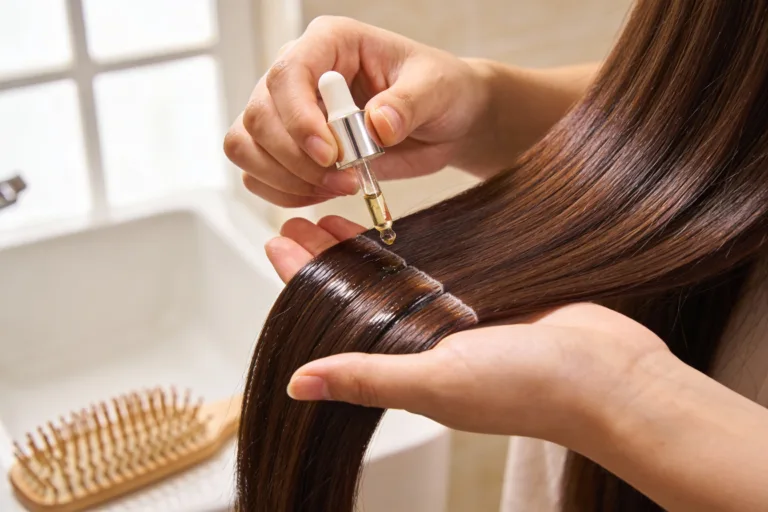
- Finishing oils: A drop of argan or a silicone-based serum on dry ends adds shine and extra seal.
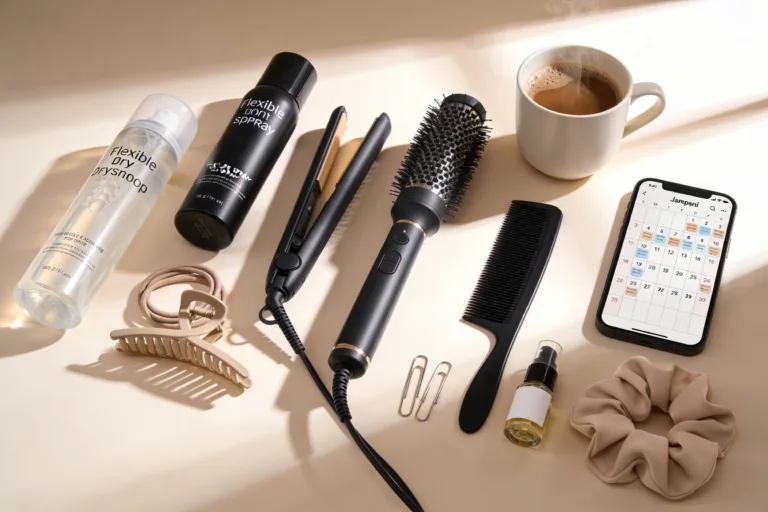
- Hairspray, but flexible: A flexible-hold spray keeps shape without crispiness. Spray from 8–10 inches away.
What if products “build up”?
Rotate a gentle clarifying wash every 1–2 weeks. Look for chelating ingredients if you have hard water. Then follow with a deep conditioner so you don’t reset the frizz cycle.

Cut, Color, and Fabric: Sneaky Frizz Triggers

Your routine’s great—then your pillowcase betrays you. The little things matter.
- Trim regularly: Split ends fray and suck in humidity. A micro-trim every 8–10 weeks keeps the line clean.
- Strategic layers: Too many short layers can puff. Ask for weight-preserving layers if your hair expands in humidity.
- Color care: Bleach raises porosity, which invites frizz. If you color, double down on protein and moisture masks.
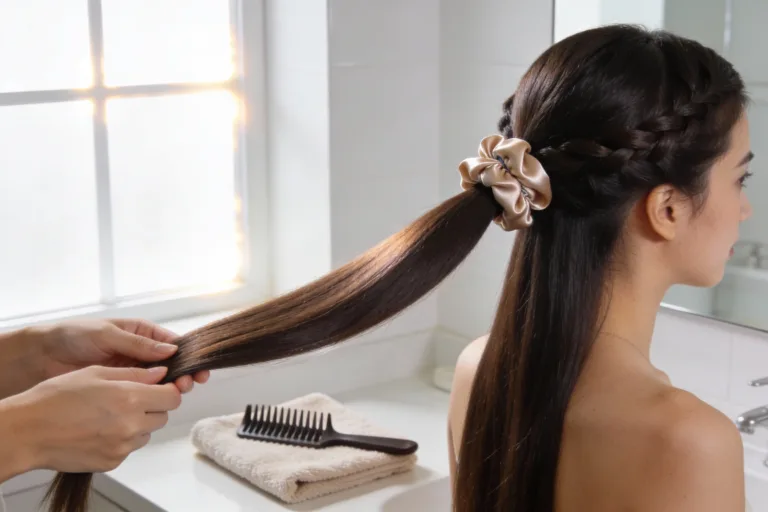
- Silk or satin everything: Pillowcases, scrunchies, and scarves reduce friction and keep your cuticle smooth overnight.
Brushes and combs
Use a wide-tooth comb on wet hair with conditioner. For dry styling, a boar-bristle brush distributes oils without roughing the cuticle. Avoid metal bristles that can scratch and fray.
Humidity-Hardy Hairstyles
When the forecast screams 90% humidity, choose styles that embrace control, not chaos.
- Sleek low bun or pony: Smooth with a dab of cream and a toothbrush spritzed with hairspray for baby hairs.
- Braids: Dutch, French, or two simple braids. They set waves and hide frizz like a charm.
- Claw clip twists: Quick, polished, and less friction than tight elastics.
- Heatless waves overnight: Wrap damp hair in a silk scarf or use a robe belt curl method. Wake up with defined shape that resists poofing.
Ingredient Cheat Sheet (IMO: know these)
Not every bottle needs to cost a fortune. Read labels and you’ll outsmart the weather.
- Humectants (glycerin, propanediol, hyaluronic acid): Great for moisture, but in extreme humidity they can pull excess water in. Balance with a sealant.
- Silicones (dimethicone, amodimethicone): Excellent frizz fighters, especially in humidity. If you prefer silicone-free, look for quats and plant oils.
- Proteins (keratin, wheat, silk amino acids): Patch damage and reduce porosity. If hair turns straw-like, ease up and add moisture.
- Oils and butters (argan, jojoba, shea): Seal moisture and add shine. Use sparingly to avoid limp roots.
- Polyquats (Polyquaternium-7, -10, -37): Lightweight smoothing and humidity resistance without heavy build-up.
Routine Builder: Your Humidity Game Plan
Want a simple roadmap? Here’s a no-drama routine you can tweak.
Fine or oily hair
- Sulfate-free volumizing shampoo + lightweight conditioner on ends.
- Leave-in spray, tiny drop of serum only on ends.
- Blow-dry with nozzle or diffuse on low; finish with anti-humidity spray.
Medium to thick hair
- Moisturizing shampoo + rich conditioner; weekly mask.
- Leave-in cream + anti-frizz cream; optional light gel.
- Diffuse on low or air-dry; seal with serum and flexible-hold spray.
Curly and coily hair
- Co-wash or gentle shampoo; deep condition weekly.
- Apply leave-in on soaking-wet hair; layer curl cream + gel.
- Plop with microfiber; diffuse on low. Break the cast with a drop of oil.
FAQ
Can I use glycerin in high humidity or will it make me frizz?
You can use glycerin, but balance it with a sealant like a silicone serum or a polyquat. Glycerin alone can pull in excess moisture from the air and swell your hair. Pairing it keeps hydration in and extra humidity out.
Do I need to avoid silicones?
Nope. Silicones work extremely well against humidity. If you prefer to avoid them, use quats and oils and clarify periodically. But if frizz runs your life, a good silicone serum is a lifesaver, IMO.
Why does my hair frizz more after coloring?
Color and bleach raise porosity and rough up the cuticle. More porous hair grabs humidity faster. Use protein masks to fill gaps, follow with moisture, and always finish styling with a sealant.
What’s the best quick fix during the day?
Carry a mini serum or anti-frizz sheet. Smooth a tiny amount over the surface and twist any rebellious pieces into a low clip. A spritz of flexible spray on a toothbrush tames flyaways instantly.
Is air-drying better than blow-drying for frizz?
It depends on your hair. Air-drying reduces heat damage, but touching your hair while it dries can cause frizz. A controlled blow-dry with heat protectant and a cool shot can actually look smoother. Choose the method that gives you the least friction and the most control.
How do I sleep without waking up frizzy?
Use a silk or satin pillowcase, gather your hair in a loose pineapple or braid, and apply a light leave-in or oil to ends. You’ll reduce friction and keep your curl pattern intact overnight. Morning refresh takes two minutes instead of twenty.
Conclusion
Humidity doesn’t have to own your hair. Hydrate smart in the shower, layer leave-ins, dry gently, and seal everything like you’re weatherproofing a patio. Keep trims regular, sleep on silk, and stash a tiny serum for emergencies. Do that, and even the muggiest day becomes just another good hair day waiting to happen—FYI, your halo can stay optional.