How to Make a Soothing Rosewater Toner at Home That Works
You want calm, glowing skin without dropping your paycheck at the beauty store? Make rosewater toner at home. It smells dreamy, feels refreshing, and takes under an hour—most of that is you waiting around like a fancy kitchen scientist. You’ll know exactly what goes on your face, and IMO, that’s half the magic.
Why Rosewater Toner Deserves a Spot on Your Shelf
Rosewater does a lot without trying too hard. It helps balance your skin’s pH, calms redness, and adds lightweight hydration. You’ll get that “I drink water and mind my business” glow.
Plus, a toner preps your skin so serums and moisturizers sink in better. It’s like setting out the welcome mat for the rest of your routine. FYI: You can customize it for dry, oily, or sensitive skin with a few tweaks.
Overeating doesn’t mean something is wrong with you. It means your system needs a reset.
If cravings keep pulling you off track, this helps you regain control without restriction. You’ll learn simple, realistic steps to stop overeating and feel satisfied again.
What You’ll Need (Nothing Fancy)
Ingredients:
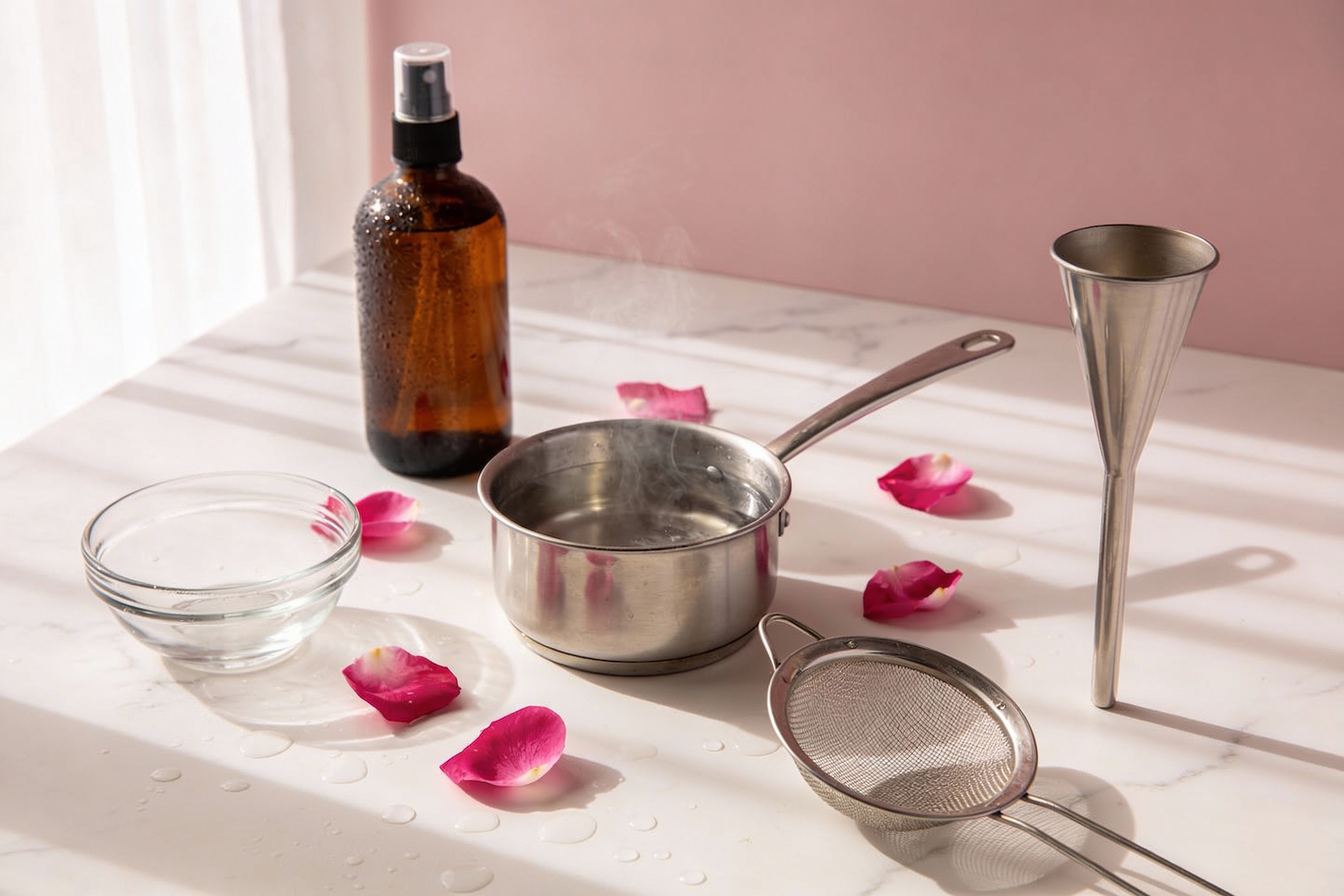
- Fresh, pesticide-free rose petals (2 cups lightly packed) or dried culinary rose petals (1 cup)
- Distilled water (1.5 to 2 cups)
- Optional: vegetable glycerin (1 teaspoon) for extra hydration
- Optional: witch hazel (alcohol-free, 1-2 tablespoons) for oil control
- Optional: aloe vera juice (1-2 tablespoons) for soothing
Equipment:
- Small saucepan with a lid
- Heat-safe bowl and fine strainer or cheesecloth
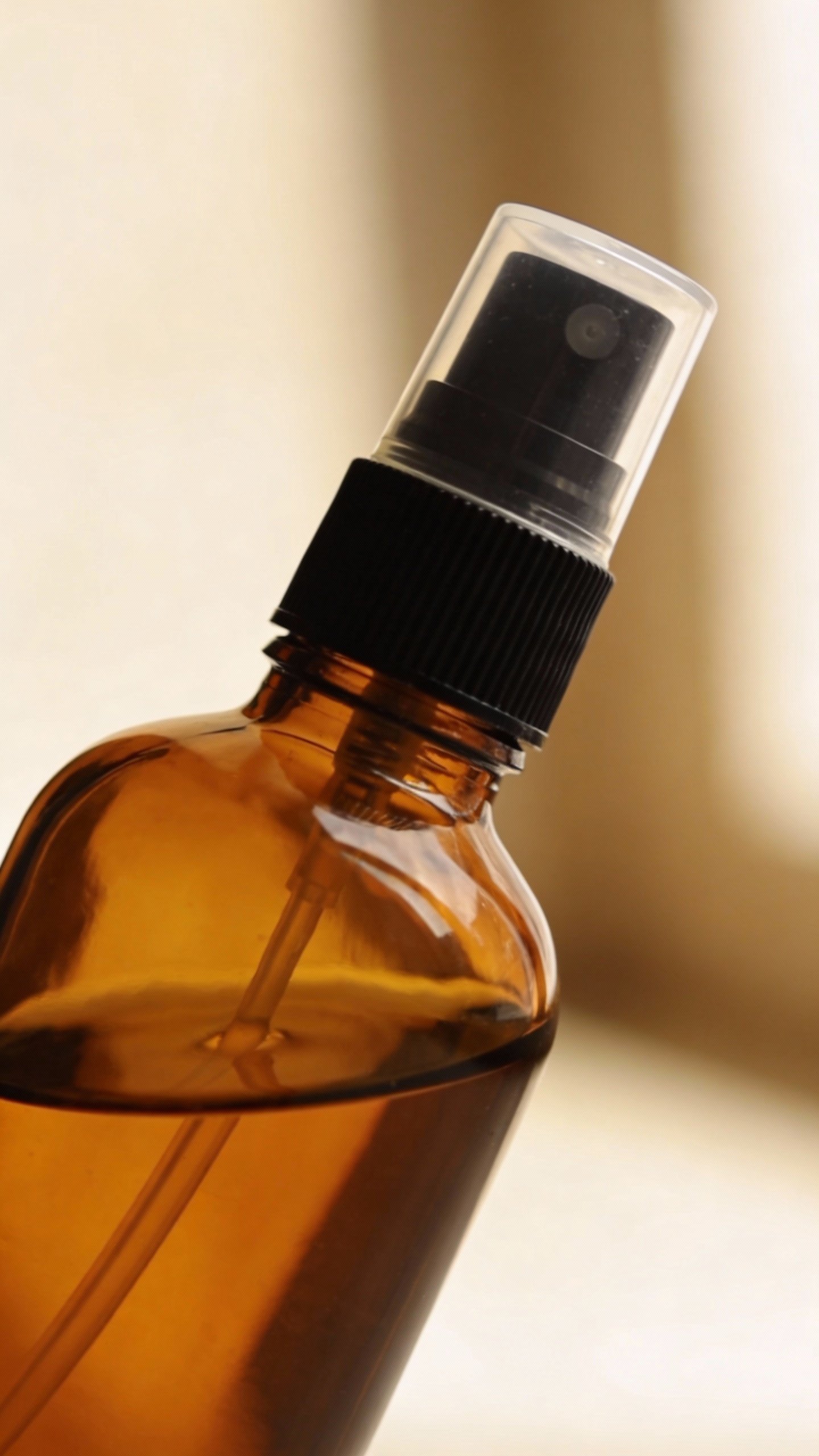
- Dark glass bottle or clean spray bottle
- Funnel (so you don’t cry while pouring)
Two Simple Methods: Choose Your Adventure
Method 1: Quick Simmer (Most Common)
- Rinse petals gently to remove dust. Place them in your saucepan.
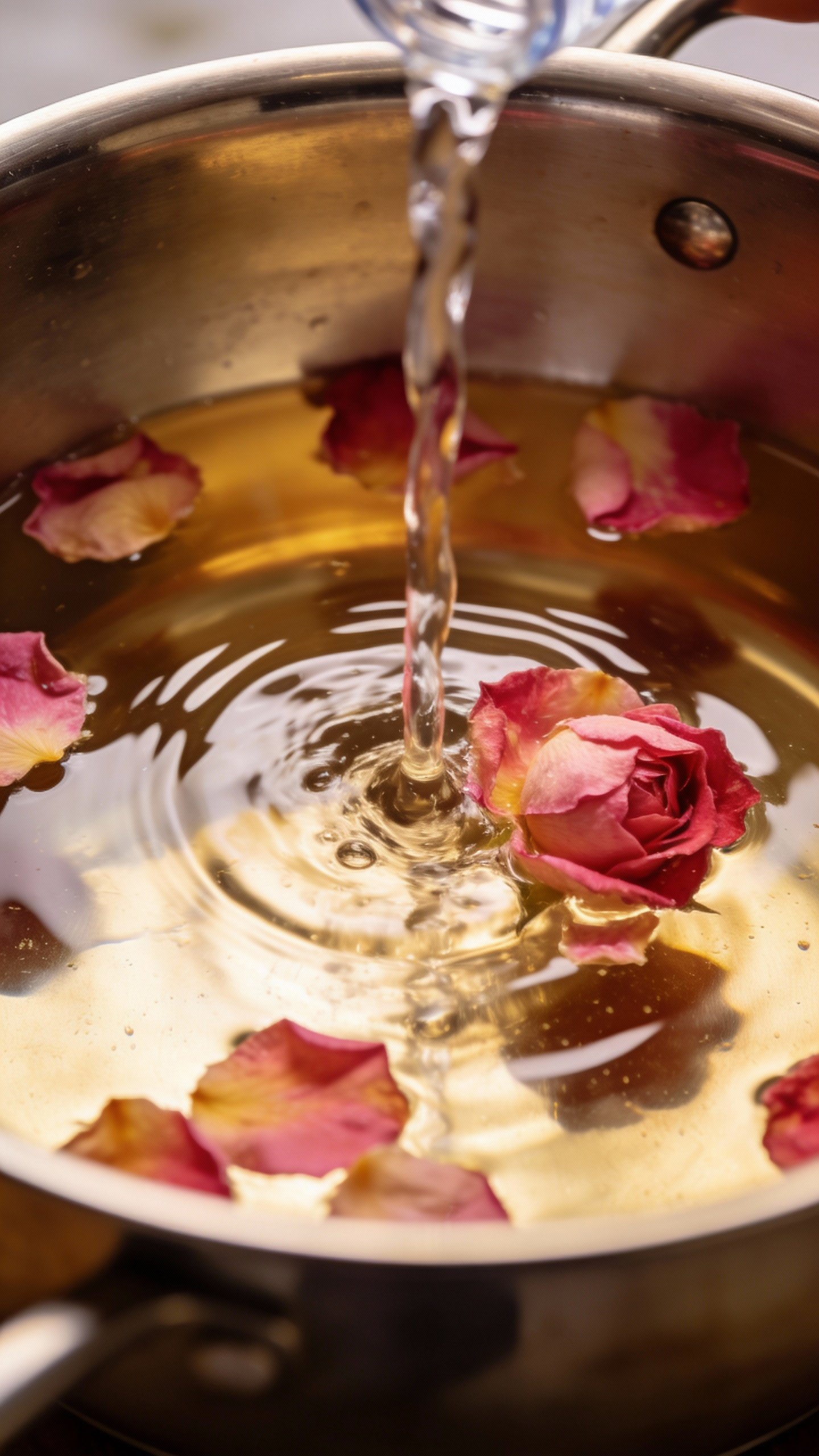
- Pour in just enough distilled water to cover the petals. Too much water = diluted scent.
- Cover the pot. Simmer on the lowest heat for 15–20 minutes until petals lose their color.
- Turn off heat. Keep covered and let it cool completely—this traps the fragrant steam.
- Strain into a bowl, then funnel into your bottle.
- Add optional boosters (glycerin, witch hazel, aloe), swirl, and cap.
Method 2: Steam Distillation (Extra Fancy, Better Purity)
- Place a heat-safe bowl upside down inside your pot. Scatter petals around it.
- Pour water to just below the top of the upside-down bowl.
- Put a second small bowl on top (right side up) to catch condensed rosewater.
- Invert the lid and add ice to the top. This helps steam condense into the bowl.
- Simmer on low 30–40 minutes, replacing ice as needed. Carefully remove and bottle.
TL;DR: Simmer method = easy and lovely. Distillation = cleaner, more stable scent.
Customize for Your Skin Type
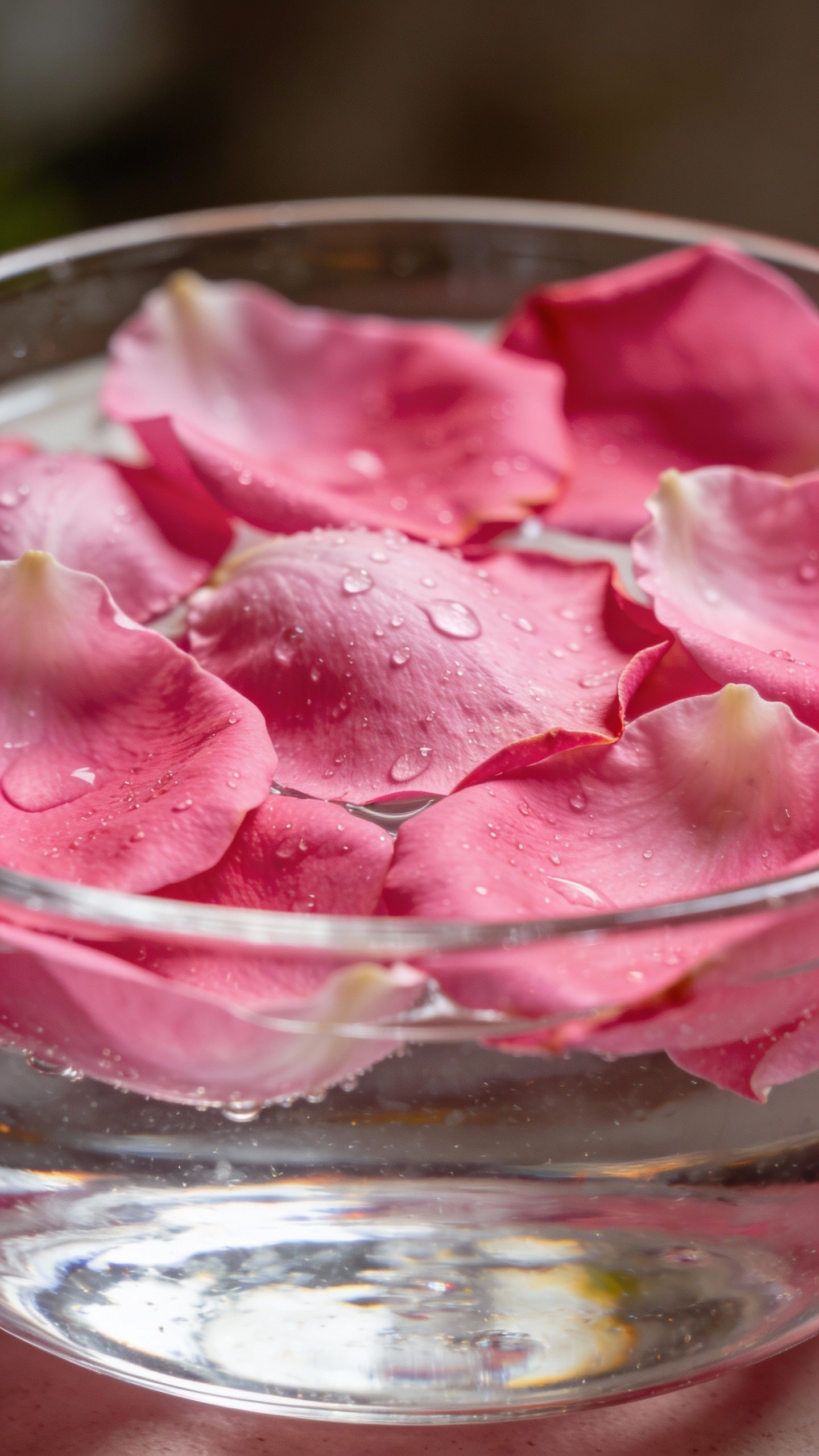
For Dry or Dehydrated Skin
Add 1 teaspoon vegetable glycerin and 1–2 tablespoons aloe juice. You’ll get a dewy finish without stickiness.
For Oily or Acne-Prone Skin
Add 1–2 tablespoons alcohol-free witch hazel. It tones and helps minimize the look of pores. Don’t go overboard—tight skin = angry skin.
For Sensitive or Redness-Prone Skin
Keep it simple: just rosewater and a touch of aloe. Patch test on your jawline first, because faces can be dramatic.
How to Use Your Rosewater Like a Pro
- AM/PM toner: After cleansing, spritz or swipe with a cotton pad. Follow with serum and moisturizer.
- Makeup refresher: Mist midday to reset and revive dull makeup. It’s a vibe.
- Post-sun chill: Keep a bottle in the fridge for cool-down moments.
- Mask mixer: Use it to mix clay masks for a gentler, non-crusty application.
Routine Pairings That Play Nice
- Vitamin C in the morning: Rosewater sets the stage, Vitamin C handles the brightening.
- Niacinamide at night: Calm-on-calm energy. Great for redness and barrier support.
- Retinoids: Use rosewater first, then your buffer moisturizer, then retinoid if you’re sensitive.

Storage, Shelf Life, and Keeping It Fresh
Your toner contains water, so treat it like fresh food. Refrigerate for best longevity and a spa-like chill. Without preservatives, it lasts about 7–10 days in the fridge.
Want longer shelf life? Try these:
- Smaller batches: Make only what you’ll finish in a week.
- Clean tools: Sterilize your bottle with boiling water or rubbing alcohol and air-dry.
- Preservative option: Add a broad-spectrum cosmetic preservative as directed by the manufacturer (e.g., leucidal, liquid germall). Follow usage rates precisely.
If it smells off, looks cloudy, or you see floaties? Say goodbye and make a new batch. Your skin deserves better than mystery soup.
Picking the Right Roses (Yes, It Matters)
Use pesticide-free roses only. If you can’t verify, use dried culinary-grade petals. Fragrant varieties like Damask or Centifolia give a richer scent, but any edible, unsprayed rose works.
Can You Use Essential Oils Instead?
Short answer: not as a toner base. Essential oils need proper dilution and can irritate skin. If you insist on scent, add 1–2 drops total per 4 ounces mixed with a solubilizer so it disperses. But honestly, real rosewater smells better and behaves better.
Troubleshooting: If It’s Not Love at First Spritz
- Too drying? Add 1/2 teaspoon more glycerin or layer a hyaluronic serum after.
- Too sticky? You added too much glycerin. Dilute with more rosewater.
- Breakouts? Remove extras and use plain rosewater for a week. Patch test again.
- Scent too faint? Use the distillation method or reduce water next time.
FAQ
Can I use tap water instead of distilled?
Use distilled if you can. It removes minerals and microbes that mess with shelf life and clarity. Tap water works in a pinch, but your toner may spoil faster.
How often should I use rosewater toner?
Twice daily works for most people. If your skin feels tight, scale back to once a day and add a richer moisturizer. Listen to your face—it will absolutely give feedback.
Is rosewater safe for rosacea or eczema?
Many people find it soothing, but everyone’s skin throws curveballs. Patch test on the jaw or behind the ear for 24 hours before full use. If you feel stinging or see increased redness, stop.
Can I mix it with actives like acids?
Yes, but keep it gentle. Use rosewater first, then apply your acid toner if you want stronger exfoliation. Don’t layer five actives and then wonder why your barrier cries.
What if I don’t have fresh roses?
Dried culinary rose petals work beautifully and often give consistent results. Just use about half the volume compared to fresh petals, since dried are more concentrated.
Will it help with acne scars?
Rosewater won’t fade scars on its own. It calms skin and supports your routine, which helps prevent new breakouts. For scars, pair with ingredients like azelaic acid, vitamin C, or retinoids.
Wrap-Up: A Little Bottle of Calm
Homemade rosewater toner feels luxe, works hard, and doesn’t require a chemistry degree. You pick the ingredients, you tweak the feel, and you get that soft, balanced glow. IMO, once you try the fresh stuff, the store-bought versions feel… meh. Go make a batch, stash it in the fridge, and enjoy that rosy main-character energy.