How to Balance Oily Roots and Dry Ends Without the Frizz
Oily at the roots, parched at the ends? Yeah, it’s the hair equivalent of combination skin—and it can drive you nuts. Your scalp goes greasy 24/7 while your ends feel like straw. The good news: you can fix this. You just need to split your routine—treat the scalp and baby the lengths—without turning wash day into a science experiment.
Why This Combo Hair Thing Happens
Your scalp produces sebum to protect hair and skin. Sometimes it overachieves. Meanwhile, heat tools, color, sun, and friction steal moisture from your ends. Add tight ponytails, overwashing, or harsh shampoos, and you’ve got shiny roots + crispy tips. Cute combo, right?
The key: balance oil production at the scalp and lock in hydration from mid-lengths down. One routine can do both—if you layer it right.
Overeating doesn’t mean something is wrong with you. It means your system needs a reset.
If cravings keep pulling you off track, this helps you regain control without restriction. You’ll learn simple, realistic steps to stop overeating and feel satisfied again.
Rethink Your Wash Strategy

We’re not washing a car here. You don’t need to scrub every inch with shampoo every time.
Shampoo smarter
- Focus shampoo on the scalp only. Massage with your fingertips for 60–90 seconds. Let the suds run down to lightly cleanse the lengths—no scrubbing there.
- Use a gentle, balancing shampoo. Look for words like “scalp balancing,” “oil-control,” or “clarifying-but-gentle.” Avoid heavy moisturizers in your shampoo.
- Clarify once every 1–2 weeks. A mild clarifying shampoo removes product and hard-water buildup. Don’t use it every wash unless your scalp loves chaos.
Condition like a pro
- Condition from ears down. Keep it off the scalp. Comb through with a wide-tooth comb to distribute evenly.
- Choose a lightweight conditioner. Think “hydrating” or “repairing” but not “butter-rich.” Save heavy masks for targeted use.
- Rinse cooler. A lukewarm-to-cool rinse helps seal the cuticle and keeps roots from looking flat.
Master the “Two-Zone” Product Approach
You don’t put face oil on a T-zone meltdown. Same logic for hair.
For the scalp (roots)
- Use a scalp serum 2–3x/week. Look for niacinamide, zinc PCA, or salicylic acid. These help regulate oil and keep follicles clear without stripping.
- Try a pre-shampoo scalp mask. Clay-based masks (kaolin, bentonite) soak up excess sebum. Apply to roots only for 5–10 minutes before shampooing.
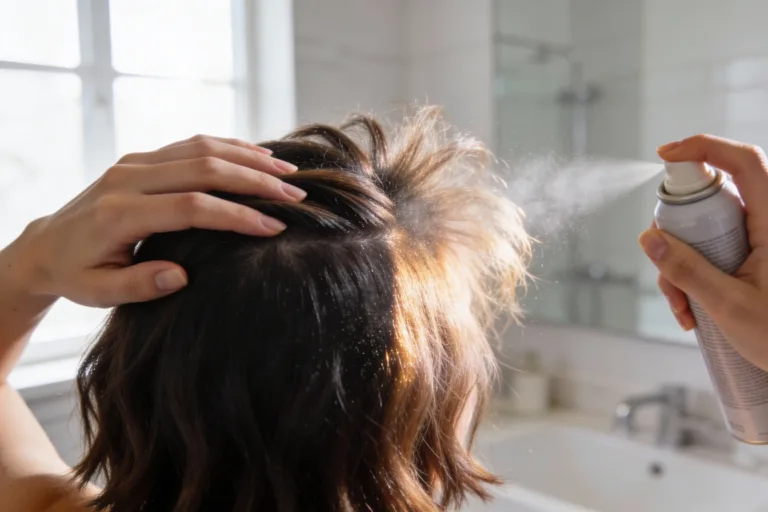
- Dry shampoo—strategically. Apply at night to clean, dry hair so it absorbs oil while you sleep. In the morning, brush out. No ash-white cast, no crunchy feel.
For the lengths (mid-ends)
- Leave-in conditioner or lightweight cream. Focus from mid-lengths down. Think featherlight formulas with glycerin, panthenol, or aloe.
- Silicone or silicone-alternative serum. A drop seals split ends, adds slip, and fights frizz. Avoid the roots IMO.
- Weekly mask, mid-ends only. Choose bond-repair or protein-light masks if your hair breaks easily. Over-protein? Hair feels stiff. If that happens, switch to moisture masks.
Wash Frequency: Find Your Sweet Spot

Overwashing makes your scalp go “oh, we’re dry?” and crank out more oil. Underwashing lets buildup party on your head.
- Start with every other day (or every 2–3 days) washes. Adjust based on how fast your roots grease up.
- On off days, refresh smart. Use dry shampoo at the scalp and a hydrating mist or a tiny bit of serum on the ends.
- Sweat a lot? Rinse with water and condition the ends, then scalp-serum after. You don’t always need full shampoo cycles.
Styling Without the Grease
You can keep volume at the roots and shine at the ends. Promise.
- Root-lifting sprays > heavy mousses. Aim for lightweight volumizers with polymers instead of oils.
- Apply heat protectant mid-ends. Use a mist, not a cream, if your hair gets limp easily.
- Blow-dry with intent. Start by lifting the roots with a round brush; finish by smoothing ends with low heat.
- Finishers: keep them distant from the scalp. Shine sprays, oils, and creams live from the mid-shaft down. One pump max. FYI, one more pump is always too many.

Habits That Quiet the Oil and Heal the Ends

Small changes = big results. Boring but true.
- Brush before bed. One or two passes with a boar-bristle or mixed brush can move sebum down the shaft. Don’t overdo it or you’ll look slick.
- Hands off the roots. Finger-combing transfers skin oils to your scalp. Break the habit. Your roots will thank you.
- Micro-trims every 8–12 weeks. Snip off split ends so they don’t travel upward and make your ends feel like hay.
- Sleep on silk or satin. Less friction, fewer split ends, less morning grease from sweat trapped under heavy fabrics.
- Mind the water. Hard water leaves mineral buildup. A shower filter helps, or use a chelating shampoo once a month.
Ingredients That Actually Help
Keep your routine simple, but ingredients matter. Here’s the cheat sheet.
Scalp-friendly (for oil control and clarity)
- Salicylic acid (BHA): loosens oil and dead skin, keeps follicles clear.
- Niacinamide: helps balance sebum and supports scalp barrier.
- Zinc PCA: reduces excess oil and can calm irritation.
- Tea tree oil (diluted): antimicrobial, good for flaky/oily scalps.
Length-loving (for hydration and smoothing)
- Glycerin, aloe, panthenol: draw in moisture without heaviness.
- Lightweight oils: argan, camellia, grapeseed—use sparingly on ends.
- Silicones or alternatives: dimethicone, amodimethicone, or plant-based esters to seal and add slip.
- Bond builders: look for bis-aminopropyl diglycol dimaleate, maleic acid complexes, or peptides if you color or heat style often.
Simple Routine Blueprint (AM/PM + Weekly)
Because sometimes you just want the checklist. IMO this setup works for most combo hair types.
On wash days
- Pre-shampoo scalp mask (optional, 5–10 min).
- Shampoo scalp only; rinse well.
- Condition mid-ends; detangle; cool rinse.
- Leave-in on lengths; root-lifting spray at scalp.
- Heat protectant mid-ends; blow-dry with lift at roots.
- Finish with a drop of serum on ends.
On non-wash days
- Night before: dry shampoo at roots.
- Morning: brush out; mist ends with hydrating spray.
- Scalp serum 2–3x/week at night.
FAQs
How often should I wash if my roots get oily daily?
Aim for every other day and support with dry shampoo at night. If oil returns by midday consistently, bump to daily with a very gentle shampoo and prioritize a hydrating conditioner on the ends. Watch your scalp—if it gets tight or flaky, scale back.
Can I use hair oil if my scalp gets greasy?
Yes—on the ends only. Warm a pea-sized amount in your palms and apply from mid-lengths down. Keep oils and heavy creams off your roots to avoid instant flatness.
What if my ends feel rough even with conditioner?
You likely need a weekly mask plus a sealing step. Use a moisture-rich mask once a week, then finish with a light silicone or serum on damp ends. If hair still snaps, add a bond-repair treatment once weekly for 4–6 weeks.
Do clarifying shampoos strip color?
Some do. Choose a color-safe clarifier and use it sparingly—every 2 weeks or after heavy product use. Follow with a hydrating conditioner or mask on the lengths.
Is scalp scrubbing necessary?
Helpful, not mandatory. A gentle scalp brush during shampoo can lift buildup without scratching. If you use a chemical exfoliant (salicylic acid), skip physical scrubs that day to avoid irritation.
Will diet or hormones affect oily roots?
Absolutely. Hormonal shifts, stress, and diet can change sebum levels. If oiliness arrives overnight or pairs with sudden shedding or scalp irritation, consider chatting with a dermatologist or healthcare provider. FYI, it’s common and fixable.
The Bottom Line
You don’t need to choose between squeaky-clean roots and soft ends—you can have both. Treat your scalp like combo skin: clarify and balance, don’t punish it. Then baby your lengths with hydration and a little sealant. Keep it consistent for 3–4 weeks, tweak what feels heavy or too light, and enjoy the best of both worlds without the greasy-meets-frizzy drama.