Glow Up Fast How to Make a Diy Face Toner Without Alcohol
You want a face toner that won’t strip your skin like a squeaky kitchen counter? Same. Alcohol-based toners can over-dry your face and poke holes in your moisture barrier. Let’s ditch the sting and make a DIY toner that balances, soothes, and feels ridiculously refreshing. Zero alcohol. Plenty of glow.
Why Skip Alcohol in Toner?
Alcohol makes toners feel super clean and lightweight. But your skin pays for that “tight” feeling with irritation and dehydration. Not ideal.
Here’s what happens when you ditch alcohol:
Overeating doesn’t mean something is wrong with you. It means your system needs a reset.
If cravings keep pulling you off track, this helps you regain control without restriction. You’ll learn simple, realistic steps to stop overeating and feel satisfied again.
- Less irritation – Sensitive skin chills out.
- Better moisture retention – Your barrier stays intact.
- Gentler pH balance – Your skin stays calm and happy.
You get the “refreshed” vibe without the burn. IMO, that’s the only vibe we want.
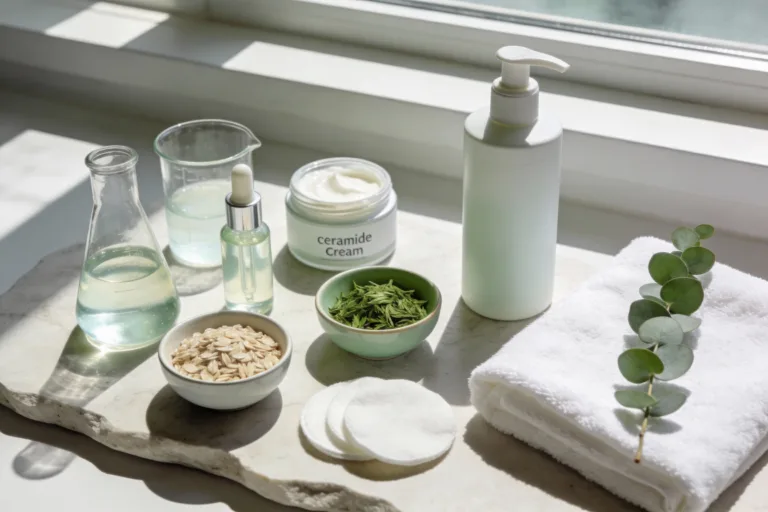
Pick Your Base: Hydrosols, Tea, or Aloe
Your toner needs a soothing base. You can play mix-and-match based on skin type.
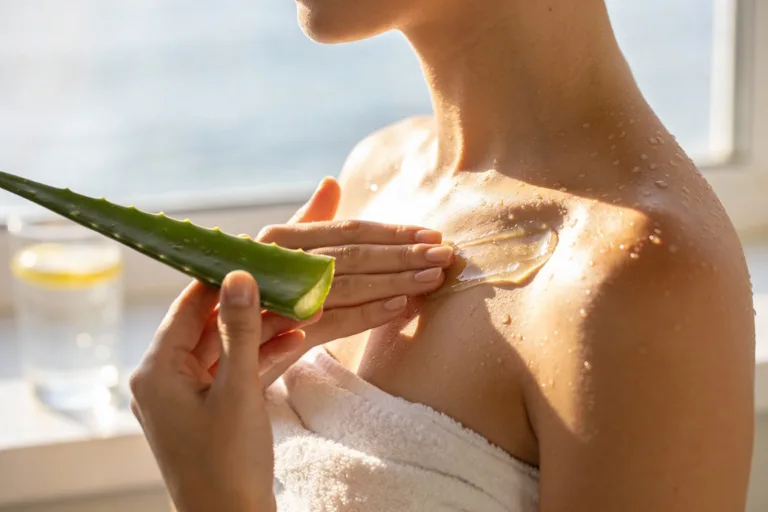
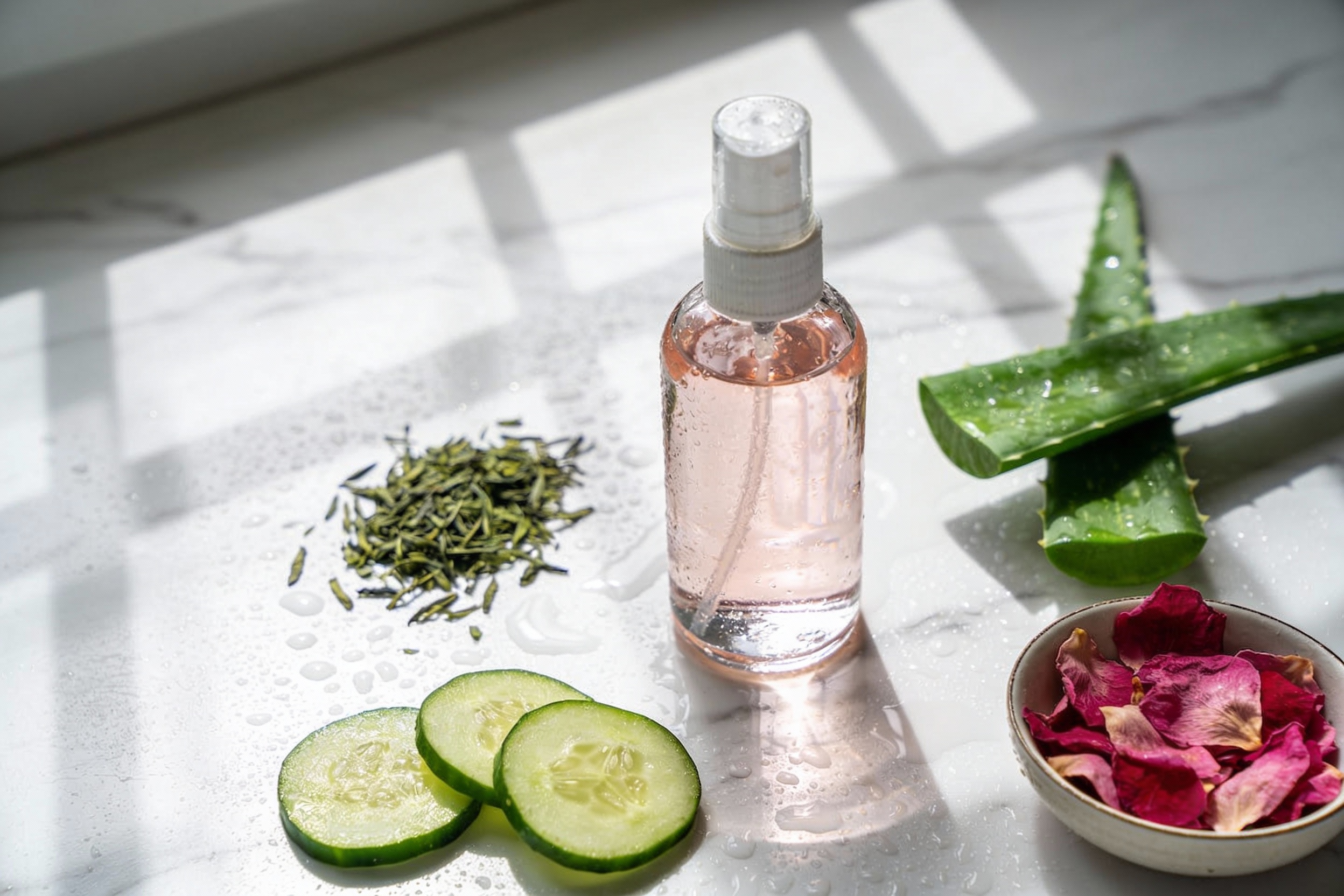
- For sensitive skin: Rose hydrosol, chamomile tea, or aloe juice.
- For oily or acne-prone skin: Green tea, witch hazel without alcohol, tea tree hydrosol.
- For dry skin: Cucumber hydrosol, rose hydrosol, aloe juice.
- For combo skin: Green tea + rose hydrosol = balanced and fresh.
Wait, what’s a hydrosol?
Think of hydrosols as the gentler sibling of essential oils. They’re aromatic waters that carry skin-loving compounds without the intensity. No diluting needed. They feel luxe without the drama.
Simple DIY Toner Formulas (No Alcohol, No Fuss)
Choose one recipe and tweak as you like. Keep your tools clean and your hands washed. Your face will notice.
1) Calming Rose + Aloe Toner (Sensitive/Dry)
- 1/2 cup rose hydrosol
- 1/4 cup aloe vera juice (not gel)
- 1–2 tsp vegetable glycerin (optional, for extra hydration)
- 4–6 drops chamomile extract or 1 tsp brewed chamomile tea (cooled)
How to use: Shake gently and apply with a cotton pad or your hands after cleansing. Store in the fridge for the best feel.
2) Balancing Green Tea Toner (Combo/Oily)
- 3/4 cup strong brewed green tea (cooled)
- 1/4 cup alcohol-free witch hazel
- 1 tsp aloe juice
- Optional: 1–2 drops niacinamide powder pre-dissolved in a teaspoon of water
Heads up: If you use niacinamide powder, dissolve it fully and keep the overall mixture gentle. FYI, a little goes a long way.
3) Cucumber + Rose Water Toner (Dehydrated/Dull)
- 1/2 cup cucumber hydrosol (or strained fresh cucumber water)
- 1/2 cup rose hydrosol
- 1 tsp glycerin
- Optional: 1/2 tsp panthenol (vitamin B5) powder, dissolved
This one smells like a spa day and acts like one too.
Make It Like a Pro: Steps and Safety
We’re keeping this DIY cute but clean. Bacteria loves water-based products, so don’t give it a free apartment.
- Sanitize everything – Wash your hands, wipe bottles and tools with rubbing alcohol, let dry.
- Brew and cool – If using tea, brew strong, cover, and cool completely to prevent contamination.
- Mix smart – Add liquids first, then humectants (like glycerin). Stir or shake in a sanitized bottle.
- Label and date – Write what’s inside and the date you made it. Future you will thank you.
- Store – Keep in the fridge. Use within 1–2 weeks for tea-based toners; hydrosol-only blends can last 3–4 weeks.
Do you need a preservative?
If you want it to last longer than a couple of weeks or you won’t refrigerate it, yes. Leucidal Liquid or Gluconolactone & Sodium Benzoate (GSB) are DIY-friendly options. Follow the supplier’s usage rates. Otherwise, make small batches and use them up.
pH Matters (But Don’t Panic)
Toner should sit around pH 4.5–5.5 to play nice with your skin. Most hydrosols and aloe juice land in the right zone. Green tea can skew neutral, which still works for many people.
Want to test?
- Grab pH strips (cheap and easy).
- If needed, lower pH with a few drops of diluted lactic or citric acid.
- Raise pH with a tiny bit of baking soda solution. Tiny, as in grain-of-salt tiny.
No need to turn your bathroom into a lab unless you’re into it. IMO, if your skin feels calm and happy, you nailed it.

Optional Add-Ins (A Little Extra)
You can boost your toner with extras if your skin likes them. Start slow and patch test.
- Niacinamide (2–4%) – Brightens and strengthens barrier.
- Panthenol (1–2%) – Soothes and hydrates.
- Allantoin (0.2–0.5%) – Comforts irritated skin.
- Sodium PCA or Hyaluronic Acid – Extra humectant power.
- Salicylic acid (0.5–2%) – Only if you know what you’re doing; keep pH ~3–4 and follow safety guidelines.
What about essential oils?
Proceed carefully. Many faces don’t love them. If you insist, use hydrosols instead or keep essential oils under 0.5% and dilute thoroughly. Patch test like your glow depends on it (because it does).
How to Use Your Toner (For Real Results)
You made it—now maximize it.
- After cleansing: Pat onto damp skin with clean hands or a cotton pad.
- Layer it: Follow with serum and moisturizer to seal in hydration.
- Morning and night: Twice daily works for most. If your skin feels tight, add more humectants or moisturizer.
- Bonus: Use as a mid-day refresh spritz. Keep it in the fridge for a spa moment.
Signs it works
Your skin looks calmer, feels bouncier, and stops overproducing oil. Breakouts don’t vanish overnight, but irritation dials down fast. If you feel stingy or tight, tweak the formula.
Troubleshooting: Fixing Common Toner Fails
No one nails it on the first try every time. Here’s how to tweak.
- Feels sticky? Reduce glycerin or add more hydrosol.
- Skin gets tight? Add aloe juice or a few drops of a mild oil after toner (squalane or jojoba).
- Redness or itching? Cut fragrance, ditch essential oils, switch to rose + chamomile base.
- Breakouts increase? Remove glycerin or heavy humectants, simplify to green tea + witch hazel.
- Weird smell? Toss it. Water-based products spoil fast without preservatives.
FAQ
Can I use apple cider vinegar as a toner?
You can, but I wouldn’t. It’s easy to over-acidify and irritate your skin. If you must, dilute heavily (think 1:10 with water) and patch test. Better: use gentle hydrosols or green tea for pH-friendly toning without the vinegar cloud.
Is witch hazel okay if it’s alcohol-free?
Yes. Alcohol-free witch hazel offers soothing and mild astringent benefits. It won’t fry your barrier like the alcohol-heavy stuff. Check the label for “alcohol-free” or “distillate with glycerin.”
How long does DIY toner last?
Without a preservative and stored in the fridge, tea-based toners last 1–2 weeks. Hydrosol + aloe blends can stretch to 3–4 weeks. If you add a broad-spectrum preservative correctly, you can push it to 2–3 months, but still watch for smell or texture changes.
Can I use essential oils for scent?
You can, but your skin might clap back. Keep it minimal (under 0.5%), pick skin-friendly options like lavender or chamomile, and always dilute. Honestly, hydrosols smell great without the risk.
Should I use toner if I have dry skin?
Absolutely—just make it hydrating. Choose rose or cucumber hydrosol, add aloe and a touch of glycerin, and follow with a moisturizer. Toner should add water to your skin; your moisturizer locks it in.
Do I still need toner if I use a serum?
They do different jobs. Toner preps and hydrates; serum treats. If your cleanser is gentle and your serum layers well on damp skin, you can skip toner—but a good one makes your routine feel (and work) better, IMO.
Conclusion
An alcohol-free toner doesn’t just avoid the burn—it boosts hydration and keeps your skin barrier unbothered. Start simple with a hydrosol or green tea base, add aloe or glycerin if you want extra slip, and keep it fresh in the fridge. Tweak until your skin says “this is the one.” Low drama, high glow—now that’s a skincare win.