Glow Up Guide How to Care for Skin During Perimenopause and Menopause
Hormones shift, skin freaks out, and suddenly your face feels like it didn’t read the memo. Perimenopause and menopause don’t play by the old skincare rules, and that’s exactly why your routine should evolve. The good news? You don’t need 47 products or a second mortgage. You need smart tweaks, patience, and a little humor. Let’s get your glow back without the drama.
What’s Actually Happening to Your Skin Right Now
Estrogen dips, and your skin notices. It produces less collagen and oil, which means texture changes, dryness, fine lines, and sensitivity. Fun combo, right?
You might also see acne and redness return—yes, like high school but with better taste in moisturizers. Hot flashes and night sweats can trigger flushing and dehydration. Bottom line: your skin barrier needs support, and you want products that hydrate, calm, and protect.
Your Core Routine: Simple, Consistent, Targeted
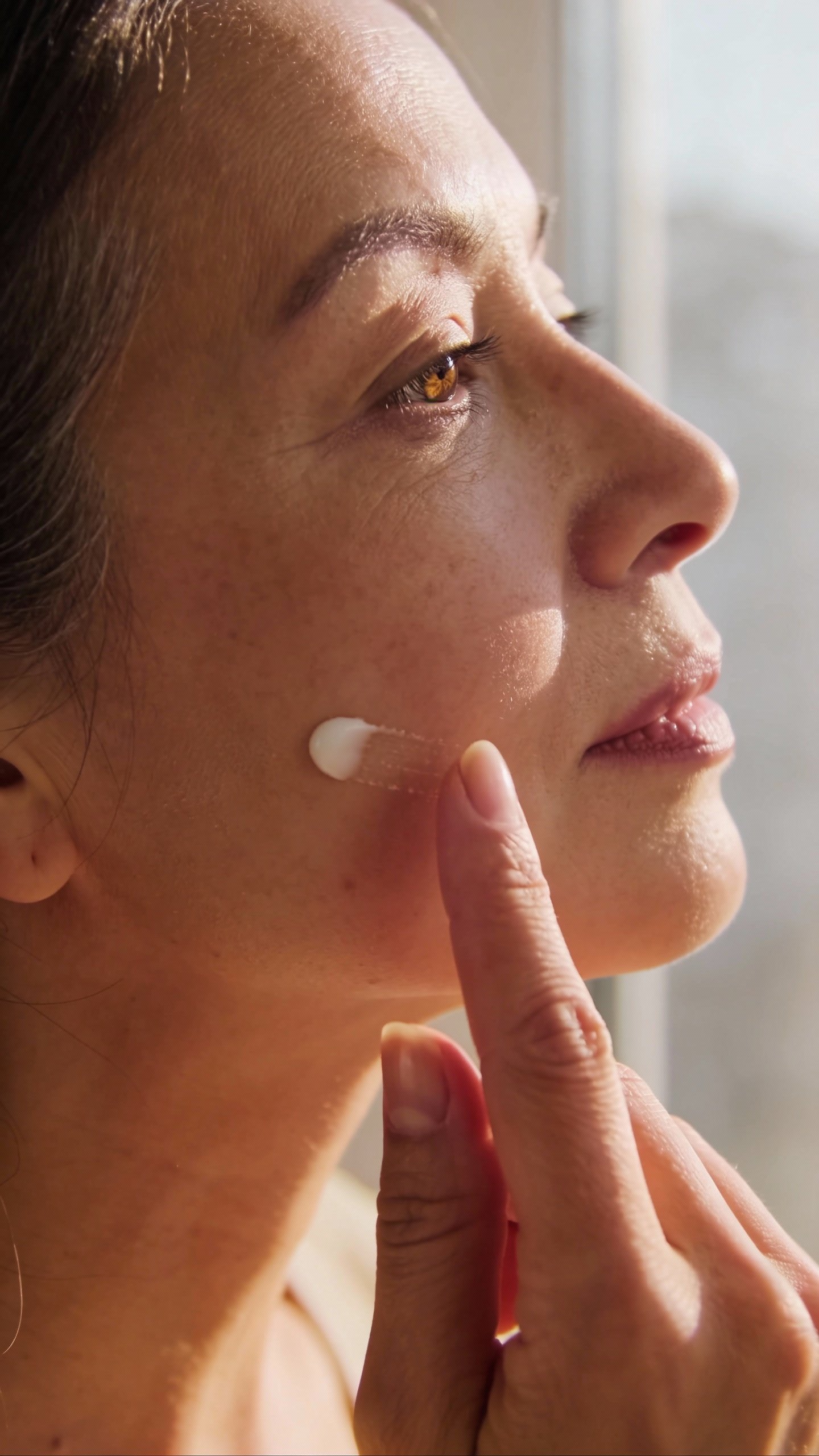
Let’s keep this easy. Four daily steps win every time.
- Gentle cleanse (AM/PM): Use a low-foam, sulfate-free cleanser. If you wear makeup or sunscreen, double cleanse at night with a balm or oil first.
- Hydrate: Layer a humectant serum—think hyaluronic acid, glycerin, or polyglutamic acid. Apply to damp skin for best results.
- Treat: Use actives that address your biggest concern—retinoids for texture and collagen, niacinamide for redness and pores, azelaic acid for acne and pigmentation.
- Seal: Choose a richer moisturizer with ceramides, squalane, or cholesterol to support your barrier. If you feel tight by midday, go thicker.
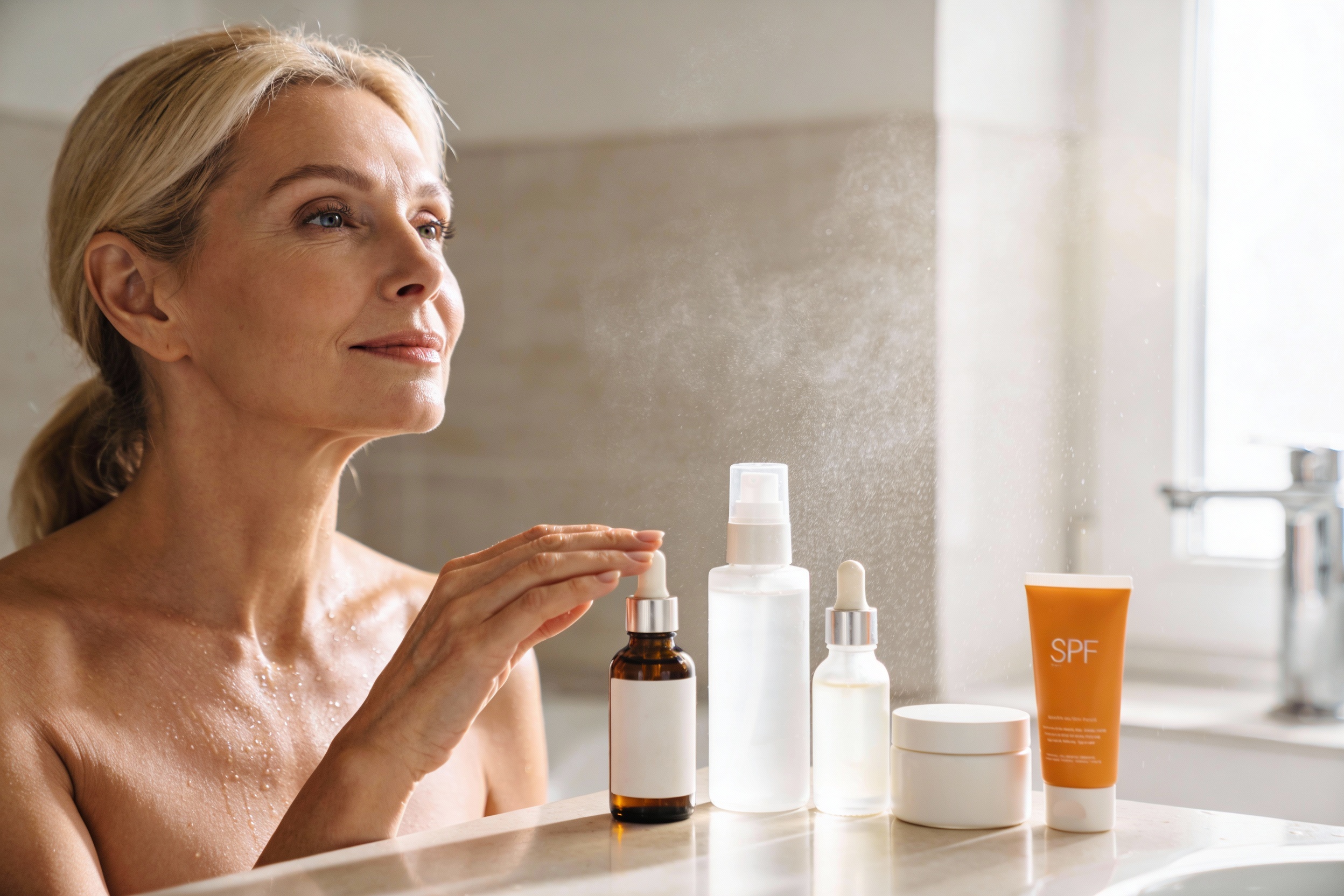
Non-negotiable: Broad-spectrum SPF 30+ every day. UV speeds up collagen loss, and we don’t have time for that. Pick one you’ll actually reapply—gel, cream, tinted, mineral, whatever you love.
Nighttime Upgrades
At night, swap vitamin C for a retinoid. Start with a gentle retinol or retinaldehyde 2-3 nights weekly. Buffer with moisturizer if you’re sensitive. Increase slowly. Consistency beats bravery here.
Hydration: Your New Best Friend
Dryness is the headline during perimenopause and menopause. You need water pulled into skin and fat locked on top.
- Humectants pull in water: hyaluronic acid, glycerin, panthenol, beta-glucan.
- Emollients smooth and soften: squalane, jojoba, shea butter.
- Occlusives lock it down: petrolatum, dimethicone, lanolin (if you tolerate it).
How to Layer for Max Hydration
Apply a watery serum on damp skin. Follow with a ceramide-rich cream. If you still feel tight, tap a tiny bit of ointment (like a pea-sized amount of petrolatum) over cheeks or around the mouth. Spot slugging, not full-face greasing, unless you want your pillow to file a complaint.
Actives That Actually Help
You don’t need everything, just the right things.
- Retinoids: The gold standard for collagen, texture, and pigmentation. Go low and slow. If irritation hits, reduce frequency and buffer with moisturizer.
- Niacinamide (2-5%): Calms redness, supports barrier, helps pores behave. Plays nicely with almost everyone.
- Vitamin C (ascorbic acid or stable derivatives): Brightens and supports collagen. If your skin hates it, try derivatives like tetrahexyldecyl ascorbate.
- Azelaic Acid (10-15%): MVP for redness, melasma, and adult acne. Gentle, underrated, endlessly useful.
- Peptides: Not magic, but can help with firmness and hydration. Look for signal peptides plus ceramides for a solid duo.
What to Skip (or Use Carefully)
– Harsh scrubs: They scratch an already sensitive barrier.
– High-strength acids daily: Over-exfoliation = flakiness and irritation. Try lactic acid weekly instead.
– Fragrance-heavy products: Lovely smell, unwanted irritation. Your call, IMO.
Hot Flashes, Flushing, and Sensitivity
Heat and hormones can turn your face tomato-red. You’re not imagining it.
– Keep a fragrance-free thermal mist in the fridge. Spray, then press a light gel moisturizer on top.
– Use green-tinted SPF or primer to visually counter redness.
– Avoid known triggers on flare days: saunas, spicy food, alcohol, and scrubs. Not forever, just when your skin throws a tantrum.
If You Suspect Rosacea
If redness persists with bumps or burning, loop in a dermatologist. Prescription options like metronidazole, azelaic acid 15%, or brimonidine can help a lot. Don’t DIY everything—sometimes you deserve professional-grade help.
Addressing Pigmentation and Texture Changes
Seeing patchy spots or melasma? Totally common with hormonal shifts.
– Daily sunscreen is your best pigment treatment. No SPF, no progress.
– Add azelaic acid, niacinamide, and a gentle retinoid.
– Consider tranexamic acid serum if melasma shows up.
– For texture, try lactic acid or PHA 1-3 times weekly. Gentle wins long-term.
When to Consider Procedures
If you want faster results, ask a pro about:
– Non-ablative lasers for redness and spots.
– Microneedling for texture.
– Light peels for dullness.
Always build up your barrier first—showing up raw to a peel is not the flex you think it is.
Lifestyle Tweaks That Pay Off
You can’t out-serum your habits. I wish.
- Protein and omega-3s: Support collagen and reduce inflammation. Salmon, eggs, tofu, walnuts—pick your fighter.
- Hydration: Aim for steady fluids. Electrolytes help if hot flashes drain you.
- Sleep: Your skin repairs at night. If sleep goes haywire, talk to your clinician—HRT, CBT-I, or magnesium glycinate may help. FYI, always clear supplements first.
- Strength training: Supports overall collagen and bone health. Bonus: it makes moisturizer application strangely satisfying.
- Manage stress: Breathwork, short walks, or five minutes of doing nothing. Yes, that counts.
Where Hormone Therapy Fits
Topical or systemic hormone therapy can help skin indirectly by improving dryness and collagen loss. It’s not a skincare product, but some people see real skin benefits alongside symptom relief. Talk to your healthcare provider about risks and benefits, especially if you have migraines, clotting history, or a strong family history of hormone-sensitive cancers. Not for everyone, but worth a conversation, IMO.
Sample Routine (Build Your Own)
Morning
– Gentle cleanser
– Hydrating serum (hyaluronic acid + glycerin)
– Vitamin C or niacinamide
– Moisturizer with ceramides/squalane
– SPF 30+ (tinted if you want coverage)
Evening
– Oil/balm cleanse if wearing SPF/makeup, then gentle cleanser
– Hydrating serum
– Retinoid (2-4 nights/week to start) or azelaic acid on off nights
– Rich moisturizer; spot slug if extra dry
Weekly
– Lactic acid or PHA 1-2 times
– Hydrating mask when skin feels cranky
FAQ
Can I still use retinoids if my skin feels dry?
Yes—just adjust. Use retinoids fewer nights, sandwich with moisturizer (before and after), and pick a gentler form like retinaldehyde. If your face peels like a croissant, pause for a few days, hydrate hard, then restart slowly.
Mineral or chemical sunscreen—what’s better now?
Whichever you’ll apply liberally and reapply. Mineral (zinc, titanium) can feel gentler on sensitive skin and helps with redness. Chemical filters spread easily and suit deeper tones without a cast. The best SPF is the one you use daily, not the one you debate on Reddit.
Why am I breaking out again in my 40s/50s?
Hormone swings plus drier skin equals clogs and inflammation. Use a gentle cleanser, avoid heavy pore-clogging oils, and add azelaic acid or a low-dose retinoid. Spot treat with benzoyl peroxide 2.5% if needed. Keep the barrier happy to prevent rebound breakouts.
Do I need eye cream?
Not required. Your face moisturizer works around eyes if it doesn’t sting. If crepiness or puffiness bugs you, look for caffeine, peptides, or retinaldehyde eye formulas. But no, you don’t fail skincare if you skip it, FYI.
Is it too late to start?
Nope. Skin responds at every age. Start simple, stay consistent, protect from the sun, and you’ll see changes in weeks to months. Collagen takes time, but it does respond.
How long until I see results?
Hydration improves in days. Redness and breakouts calm in 2-4 weeks. Texture and pigment changes take 8-12 weeks. Think marathon, not sprint—with fewer blisters and more moisturizers.
Wrapping It Up
Perimenopause and menopause change the rules, but they don’t cancel your glow-up. Support your barrier, hydrate like it’s your job, use smart actives, and commit to sunscreen. Tweak as your skin talks back, and bring in a pro when you want a shortcut. You’ve navigated tougher things than a moisturizer aisle—you’ve got this. IMO, great skin at this stage looks like comfort, consistency, and a little bit of shine.